
Patterns Denver — June 11, 2026 · Rhino District, Denver
A room full of senior design system leaders spent an afternoon in Denver doing something most conference sessions never make space for: being honest about AI. Not the polished, on-stage version — the good, the bad, and the fugly. We went first, sharing our own messy experiments, and the room met us there. Then everyone got their hands dirty.
By the end of the day, that same room had shipped real things. Here is what happened, and what they built.
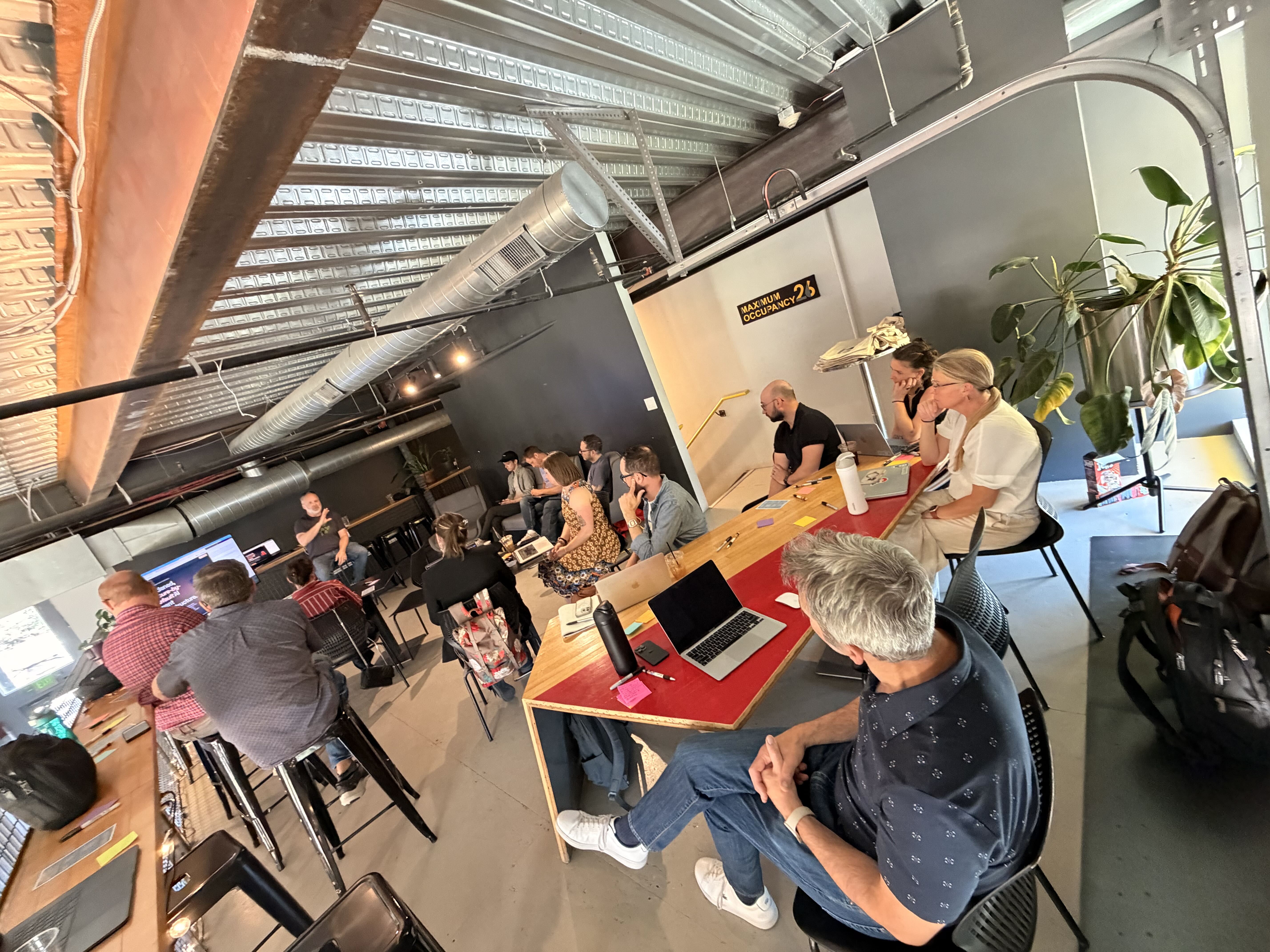
The format: be a beginner in public
We opened with storytelling, not slides. Aaron Stone from Crux Digital went first, then the Knapsack team shared what we’ve gotten right and wrong with AI — including a live demo that broke right before we ran it, which honestly made the point better than any slide could have — and Nate Wearin from Fuego UX closed out the round. This work is experimental. Things break. You learn, and you keep going.
That set the tone. Twelve practitioners from across financial services, banking, insurance, healthcare, telecom, HR tech, and enterprise SaaS spent the morning naming the hard parts out loud. One quiet thread connected the whole room: even very senior, very capable people feel behind on AI a lot of the time. Saying that together was half the value of the day.
The throughline: start with the workflow, not the tool
The lesson we kept coming back to: start with the workflow, not the tool. People, then process, then data, then technology. Almost every AI horror story in the room traced back to skipping that order. The teams making real progress with AI are the methodical ones who understand the work before they reach for a model.
That framing carried into the afternoon, where everyone picked a real problem from their own world and built toward it. Three projects tell the story.
What the room built
A scenario advisor for the Polaris design system. One group asked whether AI could turn a design system into something you can talk to. They built a scenario-based discovery and communication tool — as both a written spec and a working app. Describe your scenario in plain language and it tells you what exists in the system, which components fit, how to use them, and frames the answer for your role. What surprised them was how far they got: from a plain-language idea to a working spec and app in a single session.
We tried the same idea on ourselves. Between the group builds, we pointed AI at our own workshop site and rebuilt it in a design system we don’t own — IBM Carbon. We’re still refining it and aren’t ready to show it off yet, so the full write-up can wait. But one lesson stuck: the build itself was nearly free — the real cost was deciding what to build, and once we wrote those decisions down, each page after the first was almost mechanical.
An AI that interviews the experts and writes the spec. Another build tackled the part of design systems work that never scales: getting what’s in an expert’s head onto the page. The result was a reusable assistant that interviews subject-matter experts in plain conversation — no forms, no templates — and progressively builds a structured spec across seven dimensions, from problem and users to constraints and non-functional requirements. It runs multiple experts in sequence, tracks what people choose to defer, and surfaces where they disagree. The surprising part wasn’t the questions it asked — it was letting an expert say “not my area” and pass. That one move kept the conversation human and surfaced the disagreements a form would have silently averaged away.
The practice worth stealing: build in public
If there's one habit to take from the day, it's this: build in public. Share the work while it's still rough — the decision you're unsure about, the demo that breaks, the thing that isn't ready yet. For design system teams that instinct runs against the grain, but it's where trust and adoption actually come from. When you show your reasoning and your mistakes, people stop treating the system as a black box and start contributing to it. Building in public turns an audience into collaborators.
The lesson that ties it together
Across all three, the same truth showed up: with a good design system, AI building is close to free. The cost moves to judgment — deciding what to build, and writing those decisions down so you stop re-deciding them. That is good news for design system teams. The leverage isn’t a better model. It’s how queryable and decided your system already is.
The questions the room carried in — trust and the fear of AI-slop, the shifting design-to-engineering handoff, accountability for AI-generated experiences, what an agentic design system looks like, how to prove ROI, and how to bring a whole organization along — didn’t get solved in an afternoon. But they got named, shared, and pointed at real work. That’s where the confidence starts.
Thank you
Thank you to the practitioners who showed up willing to be beginners in public, and to our co-facilitators and partners: Angie Stevenson (Knapsack), Aaron Stone and Zach Hendershot (Crux Digital), and Nate Wearin (Fuego UX). A special call-out to Zach from Crux Digital, whose hands-on help kept the advanced track unstuck and moving. We're keeping the conversation going — and we'll see you at the Denver Product Summit in October. 🏔️
.png)